

What Parents Can Actually Do At Home (When Talking Isn't Working)
There's a particular kind of helplessness that parents of struggling teenagers know well.
You can see something is wrong. You try to talk about it. You get a shrug, a closed door, or an argument that leaves everyone feeling worse than before. You Google. You read parenting books. You book a therapist appointment they refuse to attend.
And then you sit with this heavy question:what am I supposed to do?
This post won't give you a script to fix everything overnight. But it will give you something more useful, a clearer picture of what's actually happening, and what you can do at home that genuinely helps.

Why Conversation Often Makes Things Worse
The instinct to talk things through is a good one. For adults, it works. We've spent decades building the emotional vocabulary and the self-awareness to benefit from conversation.
Most teenagers haven't.
When a young person is struggling with confidence, identity, or emotional regulation, the part of the brain responsible for self-reflection and verbal processing is still developing. Asking them to "open up" puts them in exactly the position they feel least equipped to handle, which is why they shut down, deflect, or explode.
This doesn't mean your teenager doesn't want to connect. It means they need a different pathway to get there.
What Actually Helps at Home
1. Stop making connection the goal of every interaction
When teens sense that a conversation has an agenda, that mum or dad is trying toget somewherewith them, they brace. The wall goes up before you've said anything.
The most powerful shift many parents make is taking the pressure completely off. Sit near them without talking. Watch something together without discussing it afterward. Drive them places and let the silence exist. Side-by-side presence, with no goal attached, does more for the relationship than most intentional conversations ever will.
2. Let physical activity do the talking
Movement changes the internal state faster than words do. When a young person is dysregulated, anxious, or shut down, asking them to process their feelings verbally is like asking someone to do calculus mid-panic attack, the capacity simply isn't there.
What does work: a walk, a kick of the ball, shooting hoops in the driveway. Not as a lead-in to a conversation. Just as the thing itself. You'll often find that words come naturally once the body has moved, and they mean more for it.
3. Name what you see without asking questions
Questions put teenagers on the defensive. Observations land differently.
"You seem like you've got a lot on" hits differently than "What's wrong?" The first one is something they can let sit, agree with silently, or respond to on their own terms. The second one demands an answer they might not have.
Try replacing your questions with observations. You'll be surprised how often the conversation starts itself.
4. Hold the standard without holding it against them
One of the quieter things that erodes teen confidence is when the adults around them stop expecting anything. Lowering standards feels kind in the moment, it isn't. Young people need to feel that someone believes they're capable, even when they're not showing it.
Hold them to reasonable expectations. Let there be natural consequences. Don't rescue them from every uncomfortable situation. This is harder than it sounds, but it's one of the most significant things a parent can do.
5. Look after yourself seriously
You cannot regulate someone else's nervous system from a depleted one. When parents are anxious about their teen, teens feel it, and it makes them more anxious too. The most counterintuitive thing you can do is invest genuinely in your own wellbeing, your own relationships, your own life outside the role of parent.
It doesn't mean you care less. It means you show up with more.
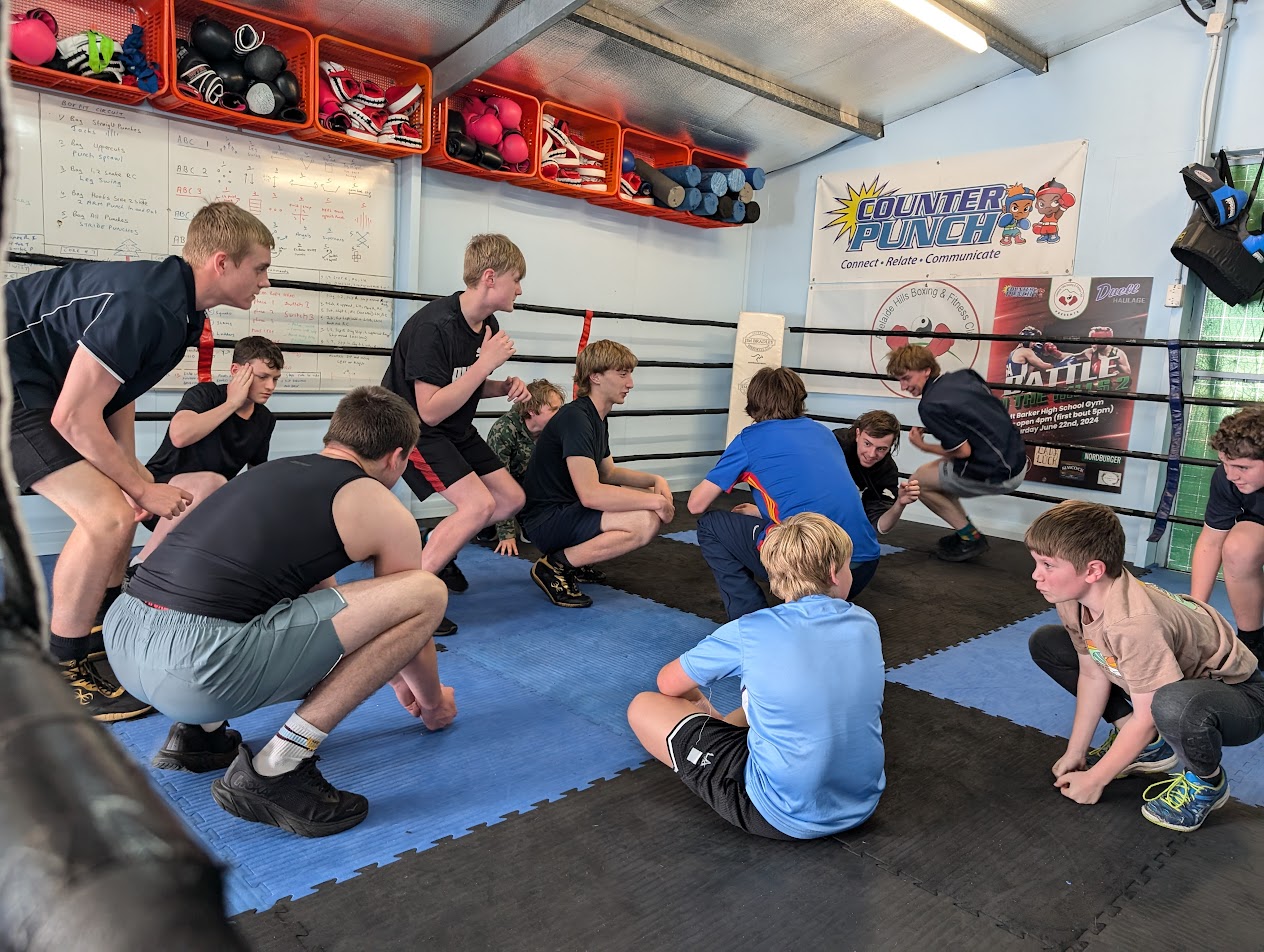
What Happens When Teens Join CounterPunch
The changes parents notice first are almost never the ones they were expecting.
They don't come home and announce breakthroughs. They don't suddenly want to talk about their feelings. What parents tend to notice is something quieter and more durable.
A slightly less defensive tone at dinner. Eye contact that wasn't there before. An unprompted mention of something that happened at the session, not deep or emotional, just normal. A teenager who used to slam doors now walking past and saying something.
One mother described it this way:"I didn't realise how much I'd been walking on eggshells until I stopped."
The transformation that happens inside CounterPunch isn't manufactured. It comes from putting a young person in a structured physical environment, with a facilitator who expects something from them, alongside peers who are going through the same thing. There's no performance required. No vulnerability asked for before it's earned. Just showing up, doing something hard, and experiencing what it feels like to be capable.
That experience, repeated over weeks, rewires something.
By the end of a program, parents consistently report improvements in:
Confidence— a willingness to try things, to be seen, to take up space
Emotional regulation— fewer explosive moments, faster recovery after conflict
Communication— not perfect, but noticeably more open
School engagement— improved attendance and attitude reported by teachers
Self-respect— the hardest to define, easiest to see
The Thing No One Tells You
The goal isn't to fix your teenager.
It's to give them an environment where they can discover, through their own experience and not your words, that they are more capable than they thought.
That's what CounterPunch does. And the things you do at home, the presence without agenda, the movement, the steady expectations, are the same principle applied in a different setting.
You're not waiting for them to come back to you. You're just staying close enough that when they're ready, you're there.
Sláinte,
Mercedas Taaffe-Cooper
CounterPunch is a structured boxing and performance psychology program for teenagers, delivered by trained facilitators across Australia. If you're wondering whether it's the right fit for your teen, start with a free call.